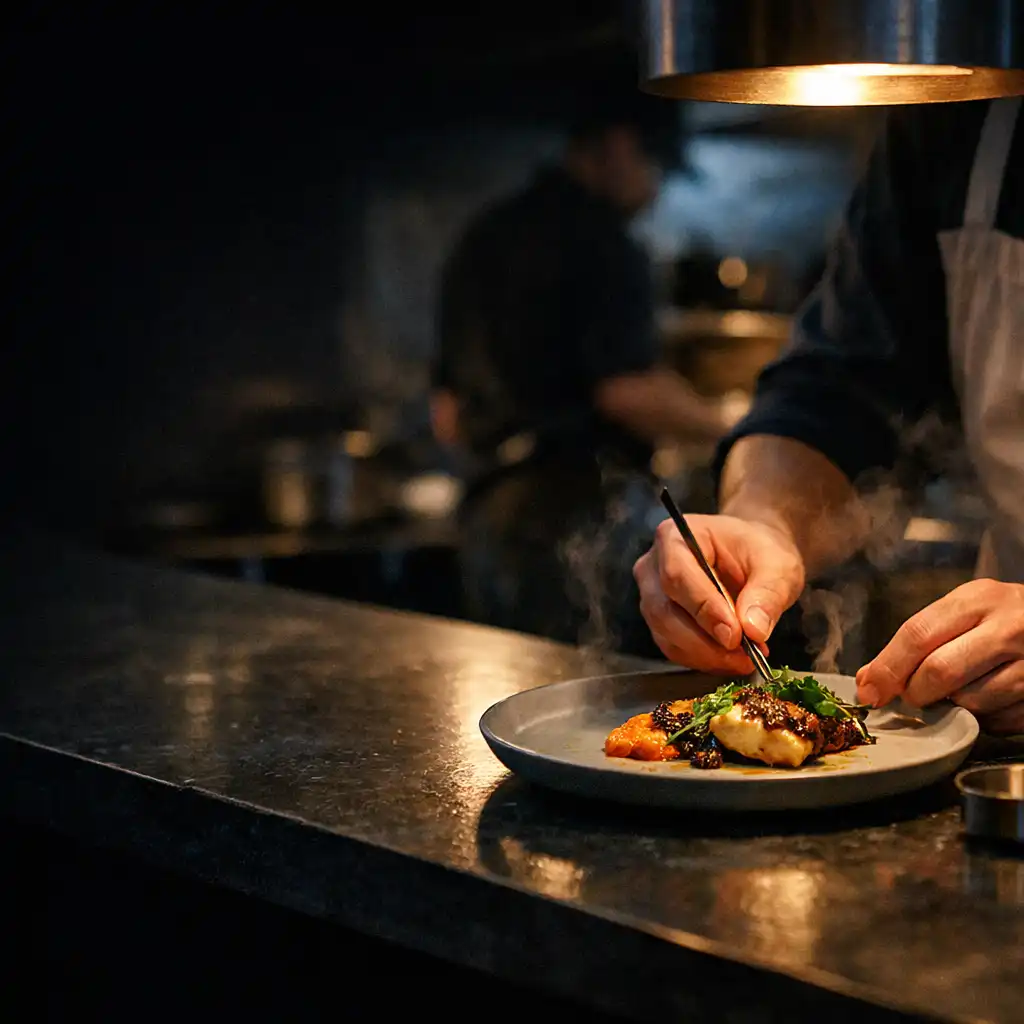
Chef finishing a ceramic plate at the evening pass

Wellington · Kitchen craft

Kitchen

At Taste & Plate, the evening begins at the pass: chefs working with season, texture, heat and quiet precision to bring a contemporary Wellington restaurant experience into focus.

Follow the route from ingredients and preparation through the pass to the finished plate, where each detail is made ready for the dining room.

See Signature Dishes

Ingredients

Season sets the direction

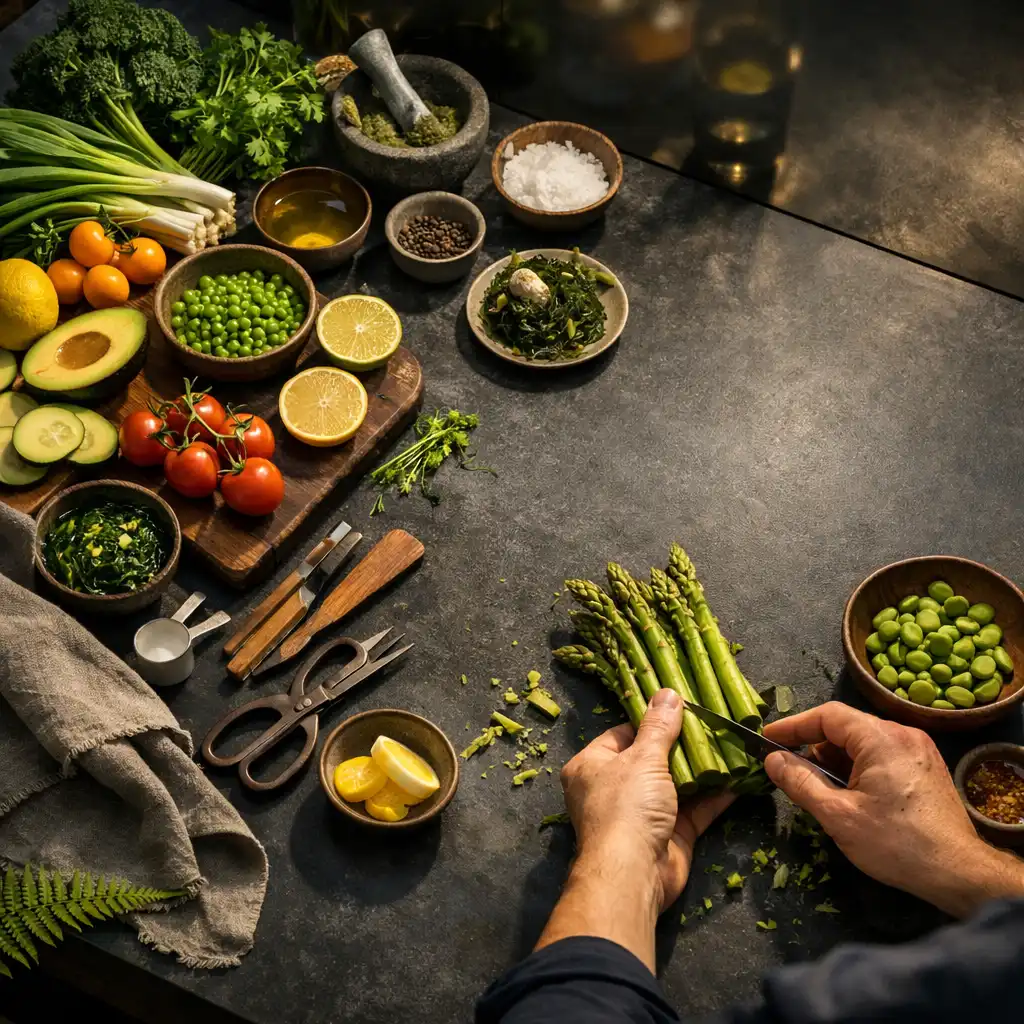
The kitchen starts with the changing character of seasonal New Zealand ingredients, allowing produce to guide texture, colour and balance before a plate is composed. Greens, roots, orchard fruit, herbs and coastal ingredients each bring their own pace to contemporary New Zealand cuisine. Rather than working from a fixed formula, the team reads what an ingredient can contribute and builds a dish around clarity, contrast and appetite.

Seasonal produce and sea greens being prepared on a dark kitchen bench
Seasonal preparation · texture before excess

01

Seafood with clarity

Seafood is handled with attention to clean flavour, controlled heat and precise finishing. The aim is to preserve its character, then give it enough contrast to sit confidently within a composed plate. For a current sense of the kitchen’s food, visitors can explore the restaurant menu Wellington.

02

Meat and vegetables in conversation

Meat and vegetable dishes receive the same considered attention. Richness may meet freshness, char may meet softness, and a vegetable can hold the centre of a dish rather than appear as garnish. The work is about balance, allowing each component to remain distinct while still contributing to a complete bite.

03

Taste before decoration

Colour, height and finishing details follow flavour and texture. Presentation matters because it directs the first encounter with a dish, not because it asks to be admired in isolation. The result is a plate that feels intentional from its first look through to its final taste. Explore the Menu.

The working kitchen

Many hands, one composed moment

The kitchen’s rhythm is collaborative: preparation creates readiness, heat brings energy, and the pass gathers those decisions before a plate enters the room.

Preparation

At the bench

Before the room fills, ingredients are washed, trimmed, portioned, tasted and organised into calm working order. This attentive preparation supports seafood, meat and vegetable dishes alike, giving cooks a clear foundation for service while keeping each ingredient recognisable once it reaches the plate.

Technique

02

At the heat

Heat is used with purpose, whether a pan, oven or another controlled method is needed to bring crispness, tenderness, smoke or depth forward. The point is not to overpower the ingredient, but to create contrast while protecting the flavour that made it worth preparing in the first place.

The pass

At the pass

Final assembly is a shared checkpoint. Flavour, temperature, texture and plate composition are considered together before a dish leaves the kitchen. It is a measured moment of coordination, connecting the detail of preparation with the calm handoff required by the dining room.

Hospitality

In the room

The final handoff belongs to the evening as much as the kitchen. A plate meets a table, conversation and the pace of a night out, carrying the work behind it without demanding attention. Discover how that craft sits within the wider Wellington restaurant experience.

Process

Technique, held lightly

Careful choices build flavour and texture without hiding the ingredient. The work is precise enough for a composed plate, yet restrained enough to let a diner recognise what is in front of them.

Step 01

Preparation creates precision

Trimming, seasoning, portioning and tasting give a kitchen the consistency to compose dishes with care. Those actions make service more focused, while leaving room for produce, seafood, meat and vegetables to retain their own texture and shape.

Step 02

Heat creates contrast

Controlled cooking can introduce crispness, tenderness, smoke or deeper savoury notes where they suit the ingredient. Timing matters because the desired contrast should support the plate, not turn technique into the loudest element of the meal.

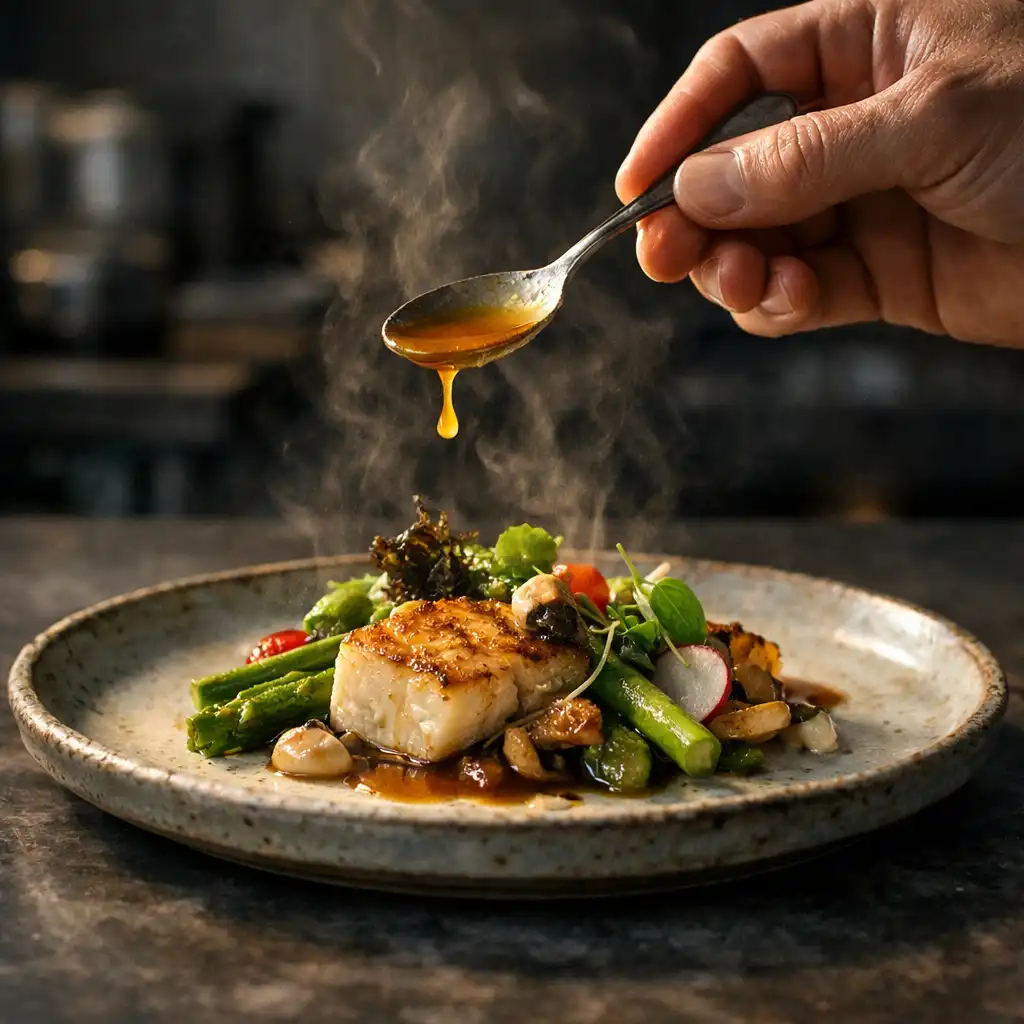
Chef adding a final sauce element to a ceramic plate at the pass
Final finishing · the pass

Step 03

Sauce brings the plate together

Sauces, dressings and finishing elements act as connective details, carrying acidity, richness or freshness across a plate. They are considered as part of the whole, helping different temperatures and textures meet without flattening their individual character.

Step 04

The final taste is deliberate

At the pass, seasoning, temperature and visual rhythm are checked one last time before a dish travels to the table. It is a quiet standard held in common: the plate should arrive composed, appetising and ready for the diner’s attention.

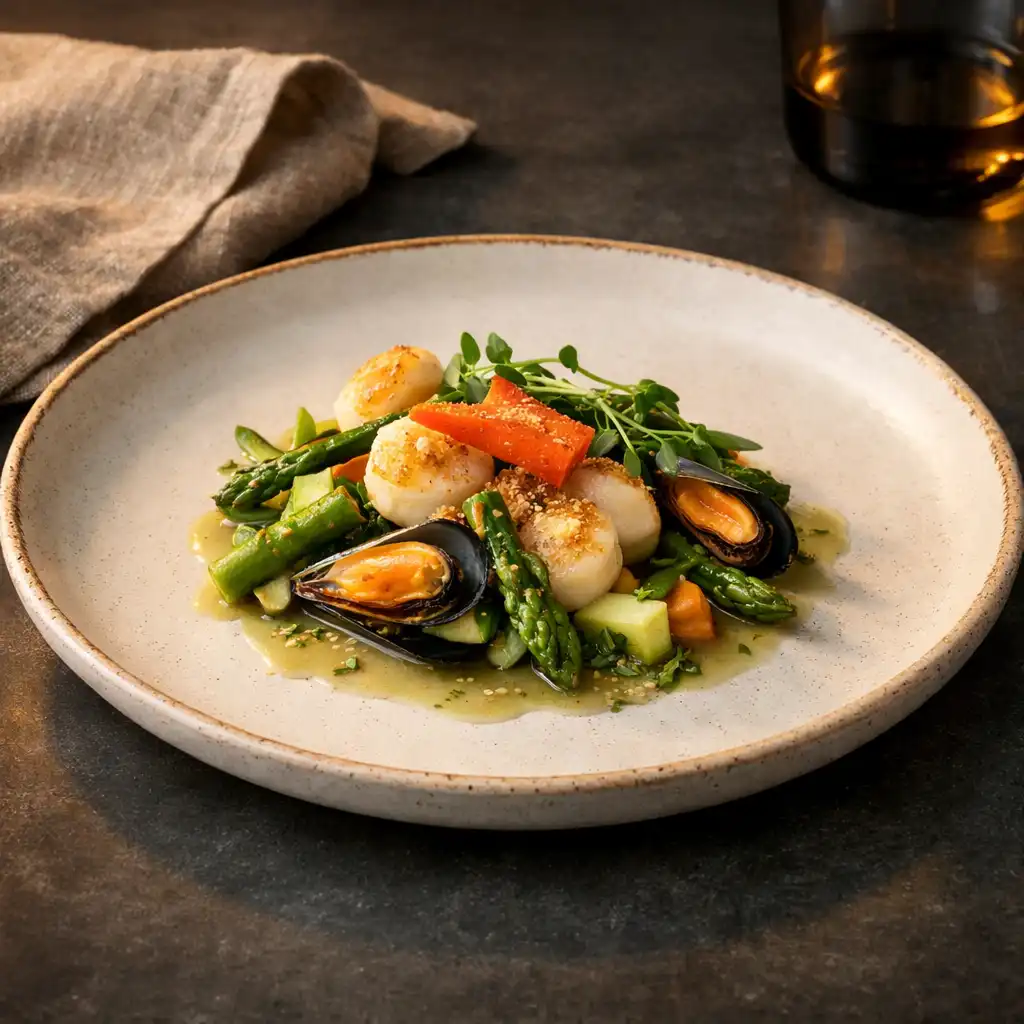
Refined seafood or vegetable dish presented on a handcrafted ceramic plate
Plate, linen and evening light

Presentation

Plate as a considered surface

Handcrafted ceramics provide a tactile, quiet frame for food, helping colour, texture and proportion read clearly at the table. The plate remains secondary to flavour, but it gives a dish room to arrive with care: a surface that holds warmth, catches light and makes the relationship between ingredients easier to see.

Composition follows the dish

Plating responds to ingredients and their preparation rather than a fixed visual formula. Warm and cool elements, crisp and soft textures, height and open space are used only where they help the dish make sense. See that final form in Signature Dishes.

The table completes the picture

Linen, glass, low evening light and calm architectural materials give the finished plate its setting. Presentation is part of hospitality, not spectacle: food arrives ready to be enjoyed within a room designed for an unhurried meal. Discover the full setting in Interior.

Service sequence

A plate’s route through service

1

Prepare

Ingredients are readied and components are organised so the kitchen can work with attention once service begins. The earlier preparation gives seasonal produce the space to be handled with care when the room becomes active.

2

Cook

Heat, timing and tasting bring prepared elements into balance, whether a dish centres seafood, meat or vegetables. The focus stays on bringing out flavour and texture in a way that feels direct and composed.

3

Finish

At the pass, sauces, herbs, texture and plate composition are checked together before the dish leaves the kitchen. Small finishing details clarify the plate, helping its flavour and visual rhythm arrive as one idea.

4

Serve

The finished plate meets the dining room, where kitchen detail becomes part of an unhurried evening at Taste & Plate. Continue into the room through the Restaurant story.

The route is simple by design: thoughtful preparation, measured cooking and a final plate that belongs naturally at the table.

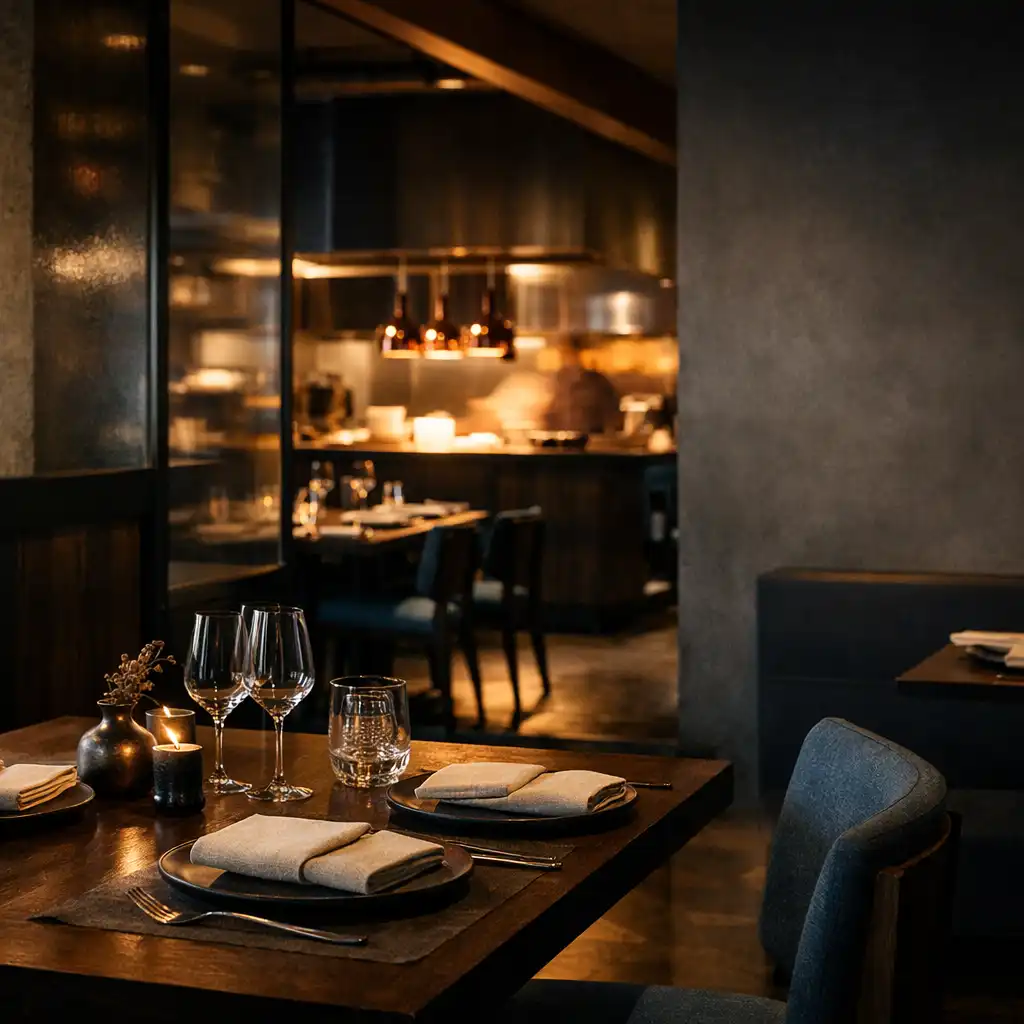
Evening dining room with a set table leading toward a softly lit kitchen
Dining room toward the kitchen glow

Kitchen to room

The kitchen and the room

An open sense of occasion

The kitchen’s presence contributes to the energy of an evening while dining remains comfortable and composed. Warm light, stone, timber and smoked-glass references create an architectural setting for food rather than a distraction from it. The result is an atmosphere where preparation feels close to the table in spirit, even as the room keeps its own calm. Explore Interior.

Plates travel with intention

The pass and dining tables are linked by timing, clarity and the visual care of a plate’s arrival. The kitchen’s work reaches the room in a form that feels ready for conversation, attention and a considered meal. Explore the Restaurant.

An evening can continue

Taste & Plate’s evening has more than one room, but this story begins with food. Discover the wider evening through the restaurant experience, where dining remains the central focus.

Kitchen notes

Kitchen notes for a Wellington evening

Taste & Plate is centred on contemporary New Zealand cuisine, with seasonal produce, seafood, meat and vegetable dishes shaping the kitchen’s work. The approach is ingredient-led and attentive to flavour, texture and presentation, so food can feel refined without becoming distant from its natural character. For a practical next view, explore the Menu.

Seasonal ingredients guide the kitchen’s approach, giving the food a changing starting point without imposing a fixed descriptive formula. The work begins with flavour and texture, then considers the balance and presentation of the finished plate. That is the contemporary New Zealand cuisine Wellington perspective carried through this kitchen story.

Yes. The Interior page looks more closely at the relationship between dishes, tables and architectural materials, while the Restaurant page places that setting within the broader dining experience. Together, they show how the room supports the food without repeating the kitchen story.

Taste & Plate includes a real physical casino room as a distinctive secondary part of the evening. It is not an online or virtual casino experience: adult guests participate face-to-face at poker, roulette and blackjack tables. On this page, the focus remains the kitchen, food and dining experience that begin the evening.

Visit

Bring the kitchen into the evening

Move from this behind-the-scenes story into an evening shaped by thoughtful food, dining tables and Wellington atmosphere. Taste & Plate is connected to the Wellington Central area around 80 Victoria Street, Wellington Central, Wellington 6011, New Zealand. For the appropriate next step, speak with the team through the contact page.

Contact Taste & Plate

Wellington Central geographic reference: 80 Victoria Street, Wellington Central, Wellington 6011, New Zealand.