
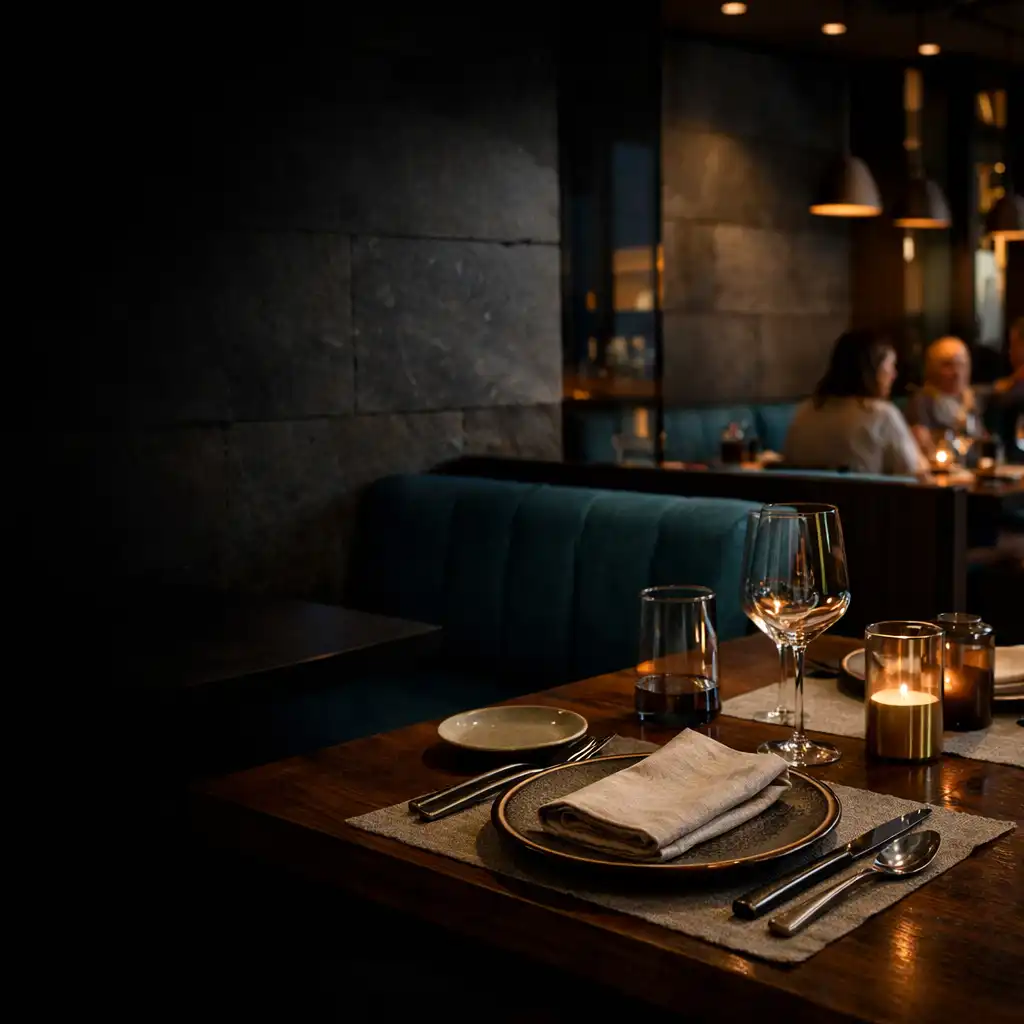
Evening dining room with dressed tables, harbour-blue upholstery and warm directional light
Evening dining perspective — dressed tables, harbour-blue upholstery and directional light across graphite surfaces.

Interior / Wellington

Inside Taste & Plate

Taste & Plate is a premium contemporary Wellington restaurant shaped for the changing pace of an evening: a quiet arrival, focused dining and an unhurried later atmosphere. Dark architectural surfaces, warm directional light and tables prepared for food and conversation make the room a considered setting for contemporary New Zealand cuisine, never a spectacle competing with it.

Explore the restaurant

Interior principle

A room built around the plate

Architecture serves the plate

The room gives each course enough visual air to arrive clearly.

Seasonal produce, seafood, meat and vegetable dishes sit against surfaces that clarify colour and form without making diners feel staged. Handcrafted ceramics carry their own character, while restrained table spacing and long sightlines let every setting feel considered. It is an interior calibrated for the New Zealand cuisine Wellington diners come to Taste & Plate to experience.
Tables set for attention

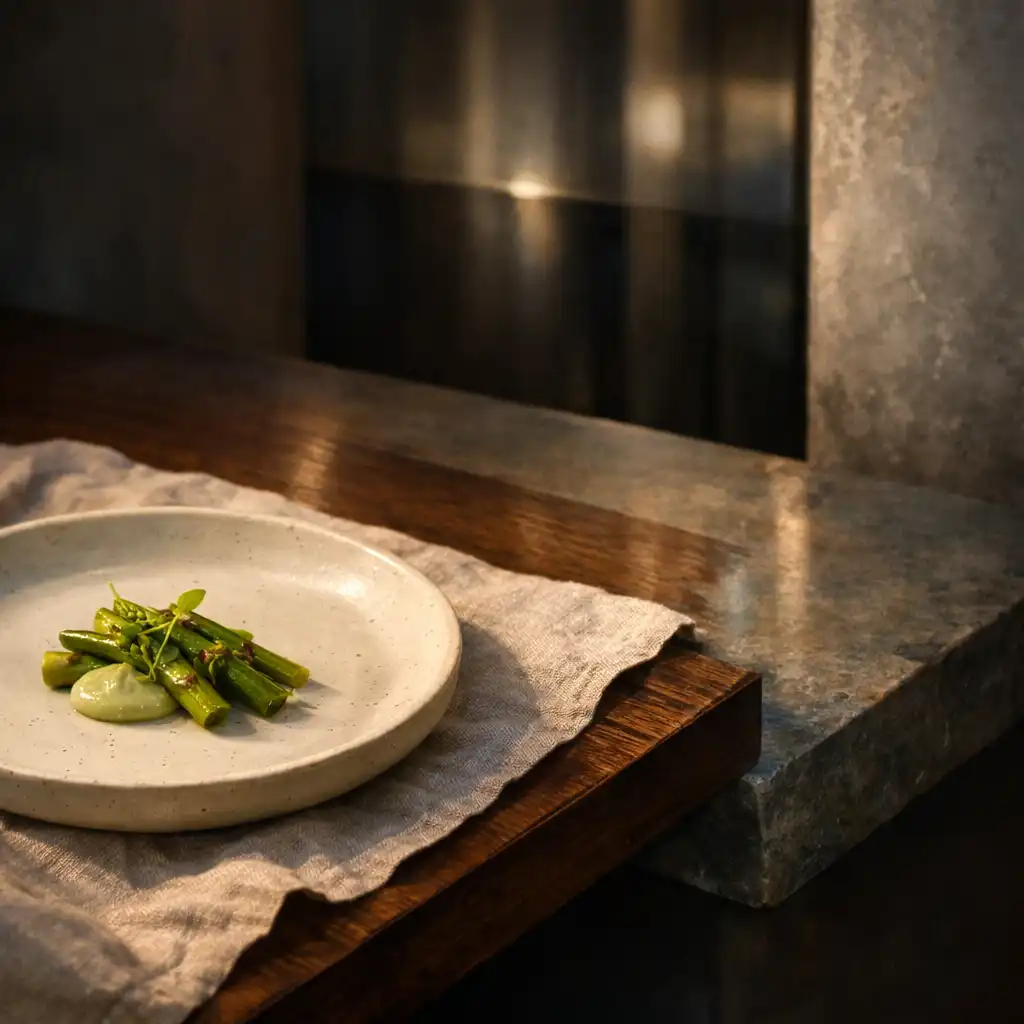
Dining tables are practical, tactile places for a sequence of courses, shared conversation and attentive service. Soft flax linen softens natural stone and the deliberate geometry of ceramic plates, while dark timber gives glassware and serving pieces a stable, quiet ground. Nothing asks to be admired before the meal does; the setting simply makes room for it.

Wellington after dark

A contemporary Wellington rhythm

Graphite shadows, reflective smoked glass and warm pools of light create an urban calm suited to a contemporary restaurant Wellington evening. The palette feels measured rather than themed: surfaces recede, reflections hold passing movement and the atmosphere shifts with the table. It is a city-minded room that keeps its attention close to food, guests and the unfolding meal.

Handcrafted ceramic plate on flax linen beside dark timber and natural stone
Table detail — ceramic, flax linen, dark timber and natural stone in evening light.

Material study

Material, light and touch

Dark timber and graphite stone

Dark timber brings warmth to the weight of graphite stone, making food colour and ceramic detail easy to read. These surfaces create architectural shadow rather than decorative luxury, giving the dining room a durable, tactile foundation that can remain quiet as plates, hands and conversation animate the table.

Harbour blue and deep fern

Harbour-blue upholstery and deep fern textiles introduce restrained local colour without becoming literal themed décor. They hold the cooler midtones of the room, making warm evening light feel more intentional and giving the tables a calm backdrop as the dining atmosphere deepens.

Service transition

Smoked glass and brushed steel

Reflective smoked glass and brushed steel catch movement and light with low glare. Their role is controlled: they frame the room, mark gentle service transitions and return a softened image of the evening without distracting from the people seated at the table.

Concrete, natural stone and linen

Textured concrete and natural stone lend a cool, grounded edge; soft flax table elements make that edge hospitable. Together they let plated seafood, vegetable dishes and desserts register naturally, with texture at hand level and enough warmth in the setting to keep the room from feeling austere.

Pace and atmosphere

The evening light plan

Light is used as a form of hospitality: it helps guests arrive calmly, see the plate clearly and settle into the quieter tempo that follows dinner.

01

Arrival

A first warm threshold leads from street to table with enough directional light for welcome and orientation. The effect is legible rather than theatrical: a guest can take in the material palette, find the table and begin the evening without the room demanding attention ahead of the company.

02

At the table

Focused pools of light preserve the colour and detail of seasonal plates while keeping architectural shadows intact. Seafood, meat, vegetable dishes and desserts become changing visual subjects over a meal, their presentation clear against linen and ceramic without flattening the room into brightness.

03

Later in the evening

After dining, the atmosphere becomes deeper and quieter rather than louder. Smoked-glass reflections hold low, warm illumination and the same materials remain present, but the tempo changes. A subtle threshold begins to suggest another room without interrupting the restaurant’s own measured rhythm.

A room-by-room progression

Rooms in sequence

The evening moves through connected atmospheres rather than a fixed route: each threshold returns attention to the table, the kitchen and the plate.

01

The dining room

The principal dining room is the centre of the visit, where food, wine and conversation set the evening’s pace. Tables, ceramic presentation and attentive service give each course a clear place in the room. Discover the broader dining experience in the Restaurant.

02

The kitchen threshold

A visual connection toward chefs at work keeps preparation close to the dining story without prescribing a particular layout. It is a reminder that ingredients, kitchen work and the finished plate belong to one sequence. Continue to the Kitchen to follow that energy.

03

The table return

Once seated, the sequence returns to the plate: menus, signature dishes and food presentation regain focus. The restaurant menu Wellington guests explore is part of the room’s rhythm, from the first look through to the final course. View the Menu or explore Signature Dishes.

04

The later room

A separate part of the venue’s evening begins after the restaurant experience, reached through a threshold of lower light and changed tempo rather than replacing dinner. Its purpose is distinct, while its material language remains connected. Read the restrained introduction on the Casino page.

At table height

A Wellington table, not a stage

The interior is designed to let a table hold conversation as comfortably as it holds a multi-course meal. Its acoustic calm is qualitative and human: enough softness for voices to settle, enough definition for service to move with purpose, and enough space for every guest to remain present with one another.

Culinary focus

Food stays in focus

Timber, stone, linen and light are intentionally restrained so seasonal New Zealand cooking remains the most immediate sensory event. Signature plates are given contrast, calm and room to arrive as themselves, with presentation supported rather than overstated. See the Signature Dishes behind that attention.

A longer table

Made for different evenings

The room can hold an attentive dinner, a longer celebration or an evening that continues into another part of the venue. Its welcome remains inclusive and adult in tone: generous enough for an occasion, composed enough for a simple meal, and always anchored by the shared experience at the table.

Urban calm

Close to the conversation

Refined urban Wellington atmosphere comes from proximity rather than display. Materials are felt in the hand, light falls where it is useful and the room leaves space between visual moments. The result is a dining setting that feels focused, hospitable and comfortably inhabited from arrival through the last course.

After dinner / Separate room

A distinct later room

Taste & Plate includes a real physical casino room as a distinct part of the evening, not an online or virtual casino experience and not the centre of the restaurant identity. It is encountered after the restaurant experience, once dinner has set the pace. This is a restaurant with a real casino, but gastronomy, service and the dining room remain the primary reason to arrive.

Physical casino room

Face-to-face tables

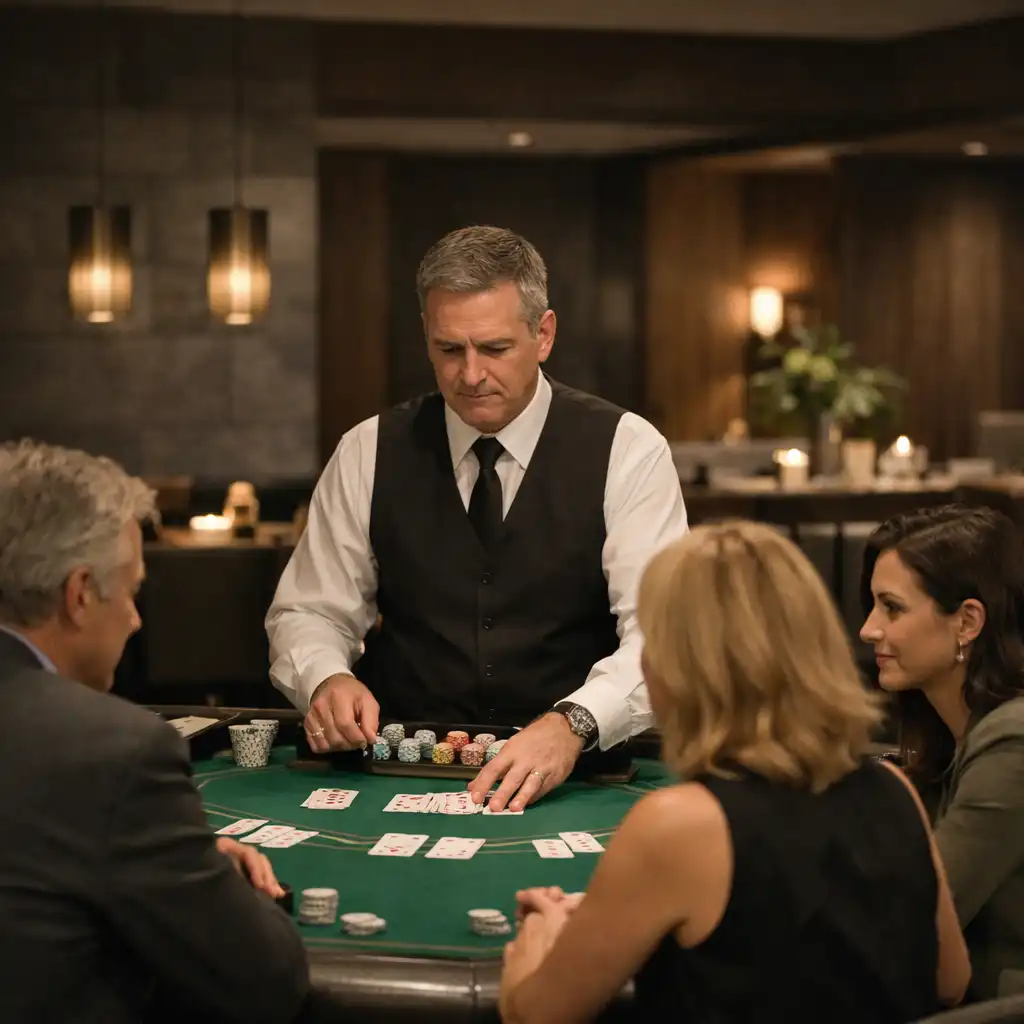
The room has poker, roulette and blackjack tables with dealers, real playing cards and neutral chips. Adult guests participate face-to-face around physical tables, in a setting defined by conversation and attentive presence rather than digital accounts or virtual play. The language and atmosphere remain factual and discreet, with no promise beyond the room’s authentic, in-person character.

A separate atmosphere

Green felt, timber, brushed metal and low warm light carry material continuity from the restaurant while making clear that this room has its own purpose and mood. It is a quiet architectural transition, not black-and-gold spectacle. Learn more about this real casino Wellington setting on the Casino page.

Adult dealer and guests seated face-to-face at a green-felt physical casino table with real cards
Physical casino room — adult guests, a dealer, real cards and a green-felt table in low warm light.

Close reading

Details worth noticing

01

Ceramic edges

Handcrafted ceramics set up a quiet relationship between plate geometry and the thin curved rules used throughout the visual language. The detail belongs to table presentation: a useful frame for food, not a decorative flourish that interrupts the course in front of it.

02

Reflections without glare

Smoked glass and brushed steel catch movement at the edge of the room while preserving calm at the table. Their softened reflections extend the directional-lighting story, adding depth without turning every surface into a mirror or making a seated guest work to see clearly.

03

Texture at hand level

Linen, timber and natural stone are the materials guests encounter most directly. Their contrast is sensory and practical: soft fabric beside a stable table edge, cool stone beside warm service, and enough texture to make a place setting feel settled before the first plate arrives.

04

The view back to the kitchen

The rooms gain their purpose from the work behind them. Continue through the Kitchen to meet the preparation, then return to the Menu where ingredients become a plate and the interior becomes part of the meal.

Plan your next view

Continue the evening

Explore the restaurant menu and signature dishes before making contact about visiting Taste & Plate in Wellington. The address is provided as a geographic reference: 80 Victoria Street, Wellington Central, Wellington 6011, New Zealand. Begin with the food, then use the interior story to decide which part of the evening you would like to discover next.

80 Victoria Street, Wellington Central, Wellington 6011, New Zealand

For the food and the work behind the room, visit the Kitchen or return to the wider Restaurant experience.